Lasso Sanou
Professeur
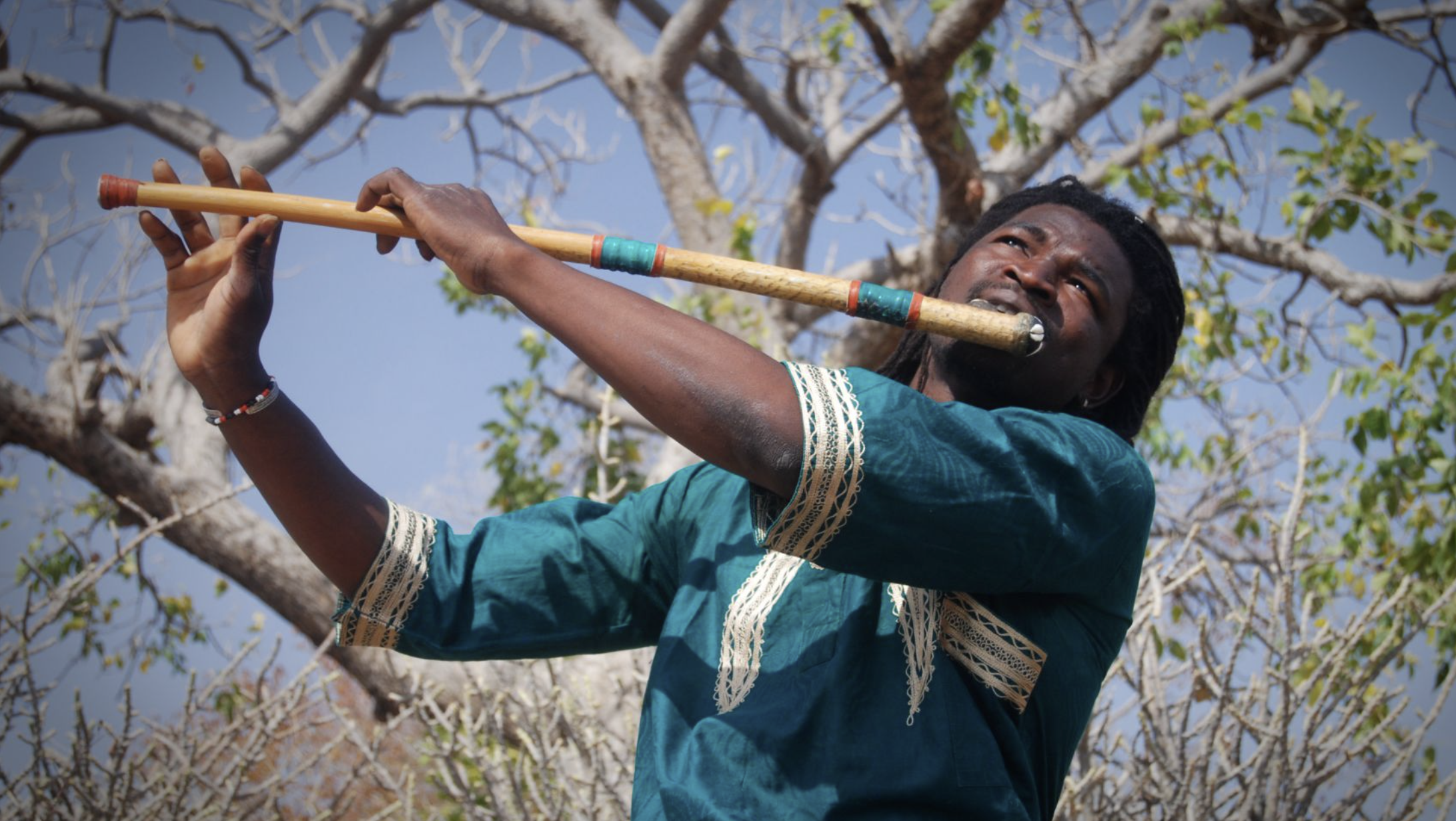
A griot from father to son, Lasso Sanou grew up in a world where music and words are at the heart of life. Born in a Boaba village called Konkuy-Boho, in the province of Kossi in northwestern Burkina Faso, Lasso developed his talents for several traditional instruments (the balafon, doum-doums, tam-tam à serres, tamani, bara, djembe, kambélé n’goni, and Fulani flute) and singing at an early age. He has performed at several international events. He formed his own group, Lasso & SINI-KAN (The Voice of Tomorrow), and created the Fusion Reggae Afro Mandingue Métissé (F.R.A.M.M.) style...
Description
The Peule flute, or talking flute, is also known as the fule or pastoral flute. This instrument was already being played during the reign of the great king Sundiata Keïta (13th century), whose Mandinka empire stretched across Mali, Senegal, Burkina Faso, Ivory Coast, Gambia, Guinea Conakry, Guinea Bissau, Mauritania, Liberia, Sierra Leone, and Niger. This three-hole flute is made of reed and beeswax. Its repertoire comes as much from the repertoire of griots as from farmers and blacksmiths, with the particularity of integrating the sounds of the voice (blowing, speaking, and singing) into its playing.
Today, it is used to provide rhythm for traditional celebrations and in large instrumental orchestras accompanied by balafons, n’goni, kora, percussion, and singing. The flute is learned using traditional oral methods, supplemented by a traditional written notation system.
Course content and objectives
• learning the notes played on the flute
• singing techniques on the flute
• discovering sound-breath-breathing techniques
• learning traditional melodies
• learning accompaniment phrases and solo phrases for playing in a group
How to obtain the instrument?
The instrument can be purchased from the teacher or made during the session (including learning repair and maintenance techniques for the mouthpiece).